What Does Asynchronous Mean? A Simple Guide to Online Learning Formats

You’re thinking about going back to school. You’re browsing programs, picturing yourself earning that credential, and then, record scratch, you see the word asynchronous.
Wait. What does that even mean? And if I don’t know, am I already in over my head?
Relax. You’re in good company. It’s not exactly a word we use in everyday conversation. Asynchronous is just a fancy word for learning without required live class meetings. You still follow a structured course schedule, but you can plan to complete the work during the times that fit your life.
In practical terms, it means your class doesn’t meet at a specific, live time each week. Instead, your coursework, like recorded talks, readings, discussion boards, quizzes, and assignments lives inside your online classroom. You log in when it works for you. That flexibility doesn’t mean you’re learning entirely on your own. Most asynchronous courses still include weekly deadlines, assignment windows, instructor feedback, class discussions, and a clear sequence of learning activities designed to keep students engaged and progressing together.
Need to complete an exam before a work shift or after the kids go to bed? Many asynchronous courses offer longer instructor-set testing windows on exam days, giving you flexibility to complete the exam at a time within that period that works for your schedule.
Need to watch a lesson during your lunch break? Do it.
Have to pause your professor mid sentence because dinner is burning? Hit pause.
Asynchronous learning is the dreamchild of college and work/life balance. It offers flexibility without sacrificing structure. While you won’t attend scheduled live lectures, you’ll still follow a guided course pathway with due dates, milestones, exam windows, faculty interaction, and opportunities to engage with classmates.
Most courses run in weekly modules. Each week, new lessons unlock and you complete the work by a set deadline whenever you choose. Monday evenings at soccer practice. Early mornings before work. Sunday afternoon with coffee at the kitchen table. It’s your call.
For adult learners, that flexibility is a major plus. You can pause, rewind, and revisit lessons as often as you need. You are not racing to scribble notes before a slide disappears. You can learn in the way that works best for you.
That said, asynchronous isn’t the only format available.
Synchronous classes meet live at scheduled times, virtually or in person. You log in with your classmates and interact with your professor in real time. The benefits? Immediate feedback. Live discussion. A real time shared experience. If you thrive on structure, immediate conversation, or need instant clarification when you raise your hand, synchronous learning might be for you.
Hybrid options combine the best of both worlds. Some coursework happens on your own schedule, while other sessions meet live. It’s a great middle ground if you want some degree of both flexibility and face-to-face connection.
So which is better for you? Here’s a quick guide:
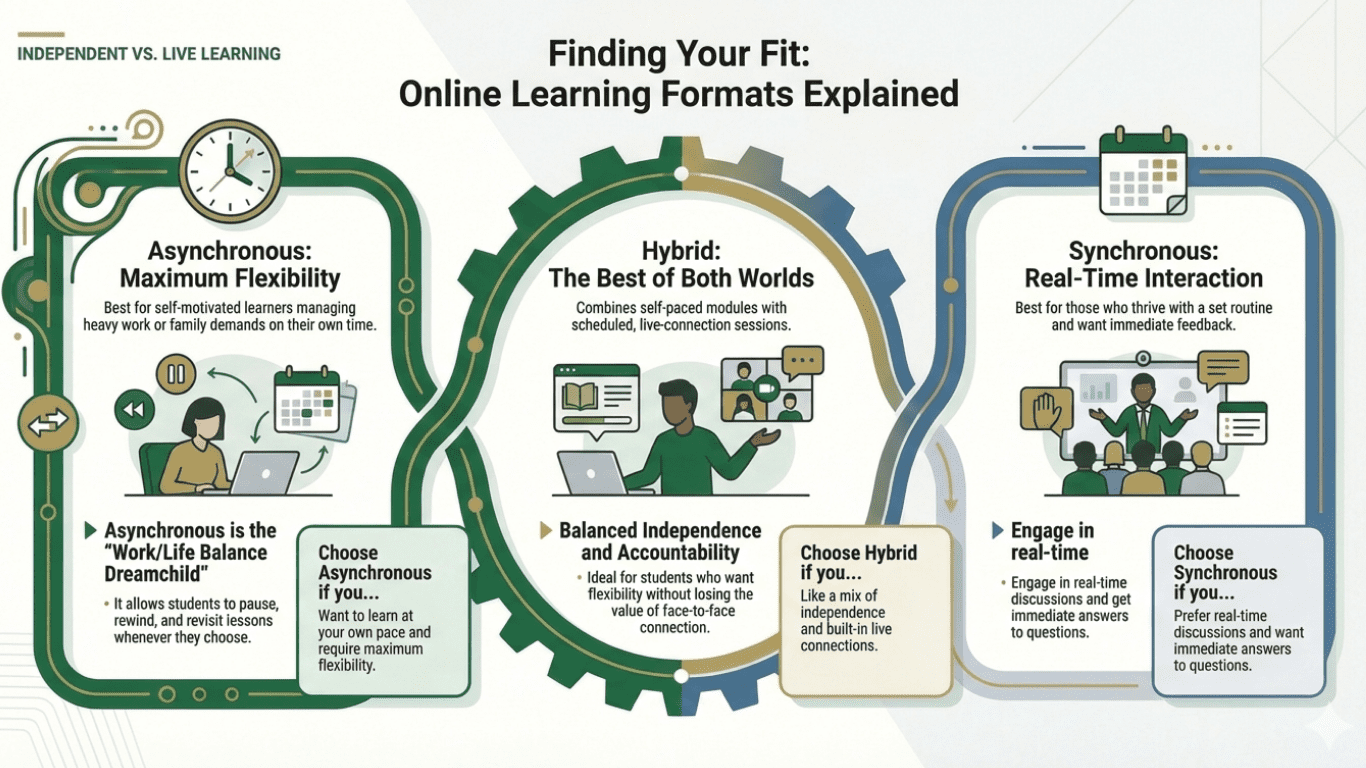
Whether you’re thinking about a career change, aiming for a promotion, or finally ready to finish what you started, today’s online programs have all the options.
At UNC Charlotte Online and the School of Professional Studies, you’ll find certificates, bachelor’s, master’s, and even doctoral programs designed in asynchronous, synchronous and hybrid formats to meet you where you are in your life. That means you can earn a respected credential and add new skills to your resume (and LinkedIn profile) without putting the rest of your life on hold.
Asynchronous learning isn’t about going it alone. It’s structured, supported learning designed to fit into real life — giving students the flexibility they need while still providing the guidance, pacing, deadlines and engagement that help them succeed.