
Not Getting Interviews? Recruiters Say This Common Job Search Habit Is the Problem

Categories:

If you’re applying to dozens of jobs and not getting interviews, the problem may not be your experience. It may be your strategy. HR recruiters say mass applying through job boards often signals that a candidate hasn’t researched the role or tailored their application. In today’s competitive job market, targeted applications that clearly match the employer’s needs are far more likely to lead to interviews.


Nicole Greer doesn’t sugarcoat it.

“As a recruiter, I can tell when someone uses the ‘apply to everything’ button,” she said. “Delete. Delete. Delete.”

It’s straightforward, but it’s true.

If you’re not getting interviews, mass applying may be the problem. Sending the same resume to dozens of jobs through Indeed or ZipRecruiter without tailoring it signals a rush-job approach that’s going to get you tossed from the pile. Recruiters like Greer — an HR strategist and instructor who teaches human resources courses at UNC Charlotte — can tell when you haven’t thoroughly read the job description, and those applications rarely move forward.

Today’s job market doesn’t allow for that kind of blasé approach. In fact, U.S. job openings recently fell to about 6.5 million, the lowest level since 2020, according to the U.S. Bureau of Labor Statistics. When fewer roles are created, employers become more selective in who they hire. That means quality beats quantity every time.

Why Mass Applying Hurts Your Chances

Technology makes it easy to apply to 50 jobs in an hour. But that convenience works both ways.

Recruiters see:

“It’s like a shotgun,” Greer explained. “I can tell you didn’t spend any time looking at what the job really is. And so, I just delete.”

The mass apply strategy doesn’t show employers what they’re really looking for: someone who understands the role, wants the role, and can do the role.

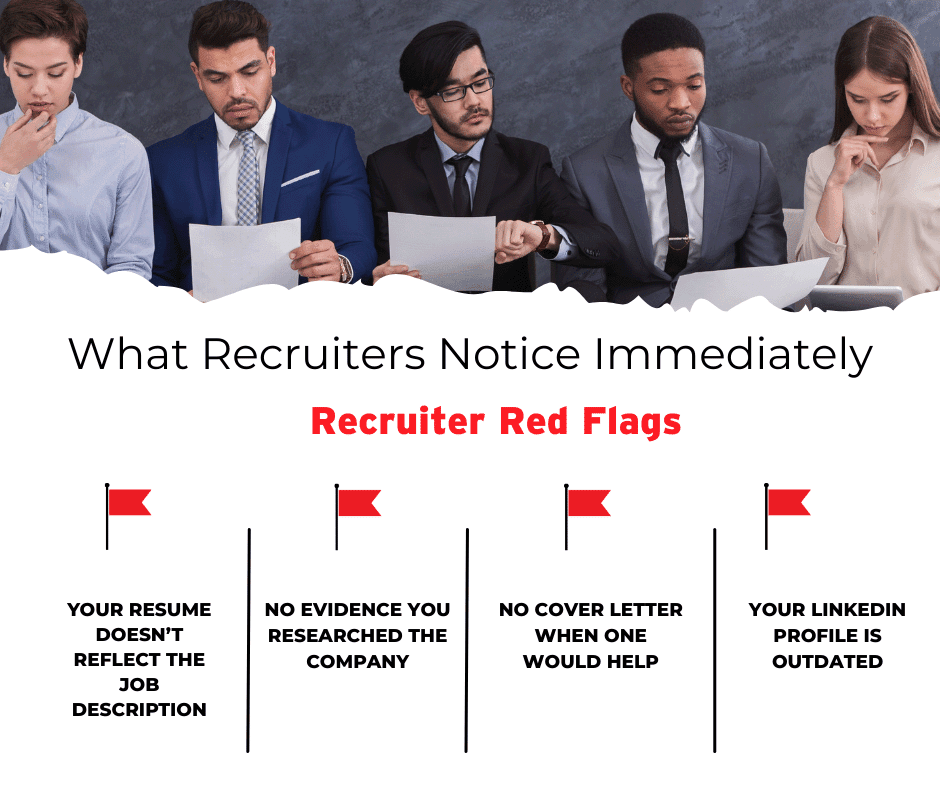
recruiter red flags

4 Ways to Stand Out in Today’s Job Market

1.  Know Where the Jobs Actually Are

Zoom in on your industry. Before you apply to anything, make sure you’re aiming at the right target. National headlines might say job openings are down, but that’s not true for all sectors, like AI, IT, and healthcare, which are still hiring aggressively.

Why the Charlotte Job Market Tells a Different Story

The Charlotte, North Carolina job market remains stronger than many parts of the country, especially in sectors like finance, healthcare, technology, and professional services. The Charlotte–Concord–Gastonia metro area unemployment rate has hovered around 3–4% in recent months, which economists generally consider a healthy labor market.

“We like to ask: Is the job market good, or is the job market bad? The truth is, it depends. What market are you in?” said Greer. “You need to know what’s going on in your industry, your segment, wherever you’re working.” 

That means opportunities may exist. Just not everywhere.

For job seekers, paying attention to local hiring trends, not just national headlines is key.

Charlotte continues to attract companies and talent thanks to its strong banking sector, growing healthcare systems, and expanding technology workforce. But even in a strong regional market, employers are being selective.

The candidates who stand out are the ones who understand the industry they’re applying to, and can clearly explain how their skills solve a business problem.

Upskill With Purpose, Not Randomly

If your industry is shifting, it may be time to add new skills. Learning areas like AI tools, project management, HR strategy, or leadership development can help align your experience with where hiring is happening.

2. How Continuous Learning Helps You Stand Out

Employers aren’t just hiring for experience. They’re hiring for curiosity and adaptability.

Continuous learning shows employers that you’re invested in your career and ready for new challenges. For many professionals, that means taking short courses, earning certificates, or developing new technical and leadership skills that align with where the job market is heading.

“If I’m hiring somebody,” said Darby Starnes, an HR strategist and instructor in UNC Charlotte’s Human Resources Exam Prep program. “I’m going to hire someone who has been continuously learning versus somebody who hasn’t. That shows commitment to the future.”

Certificates, courses, and professional development programs signal something important to employers: you’re paying attention to where the industry is going.

3. How to Write a Cover Letter Recruiters Actually Read

Cover letters may feel outdated, but Greer says they’re actually a secret advantage.

“Nobody does one anymore,” she said. “So when someone does it well, it absolutely stands out.”

The key is not writing a generic letter.

Instead, Greer suggests a simple approach:

  1. Go to the job posting and identify three specific things the employer says they want.
  2. In your cover letter, match each one with a real example from your experience.
  3. Show how your past work solves the employer’s problem.

For example:

Dear [Hiring Manager],

You mentioned you’re looking for someone who can deliver strong customer service. In my previous role at [Company], I handled high-volume customer requests and helped improve response times by 25%.

You also noted the importance of training new employees. In my last position, I developed onboarding materials that helped reduce training time for new hires.

Finally, your posting highlighted teamwork. I regularly led cross-department meetings to ensure projects stayed on track.

Three needs. Three proof points. That approach immediately shows a recruiter you actually read the job description.

4. Treat LinkedIn like your professional storefront

If you apply for a job, recruiters almost always check your LinkedIn profile next. What they see there can either reinforce your application or raise red flags.

Greer recommends three simple habits:

Keep your profile updated.
Your headline, experience, and skills should reflect the type of role you’re applying for.

Show that you’re engaged in your field.
Posting or sharing industry articles a couple times a week signals that you’re paying attention to trends.

Build your professional network.
Join industry groups, follow companies you’re interested in, and connect with professionals in your field.

“Networking is something a lot of newer professionals struggle with,” Starnes said. “Getting involved in professional associations or community organizations shows employers you care about the results your industry delivers.”


In today’s job market, the edge doesn’t go to the person who applies the fastest. It goes to the person who applies with intention.

Many professionals turn to short certificate programs to stay current with workplace trends. UNC Charlotte’s certificate programs help students build practical skills and better position themselves for new opportunities in today’s evolving job market.